
Effective Neurofeedback Therapy for Brain Health
Neurofeedback is a non-invasive, medication-free treatment designed to address brain-related conditions such as ADHD, anxiety, and traumatic brain injuries (TBI). Despite its growing popularity, many people still ask: Does neurofeedback actually work? In this guide, we’ll answer that question and explore the science, process, and benefits of neurofeedback therapy.
Neurofeedback: Understanding Its Potential and Effectiveness
-
Neurofeedback is a therapy designed to train the brain to function more efficiently by promoting healthier brain wave patterns. By improving brain function, individuals often experience reduced symptoms related to conditions like anxiety, ADHD, and brain injuries. The concept of neuroplasticity — the brain’s ability to adapt and reorganize itself — is central to neurofeedback. This therapy works by helping the brain recognize and correct irregular brain wave patterns, supporting overall brain health and performance. Simply put, neurofeedback communicates with the brain in its own language — brain waves — to create lasting positive change.
-
A typical neurofeedback treatment involves a few key steps:
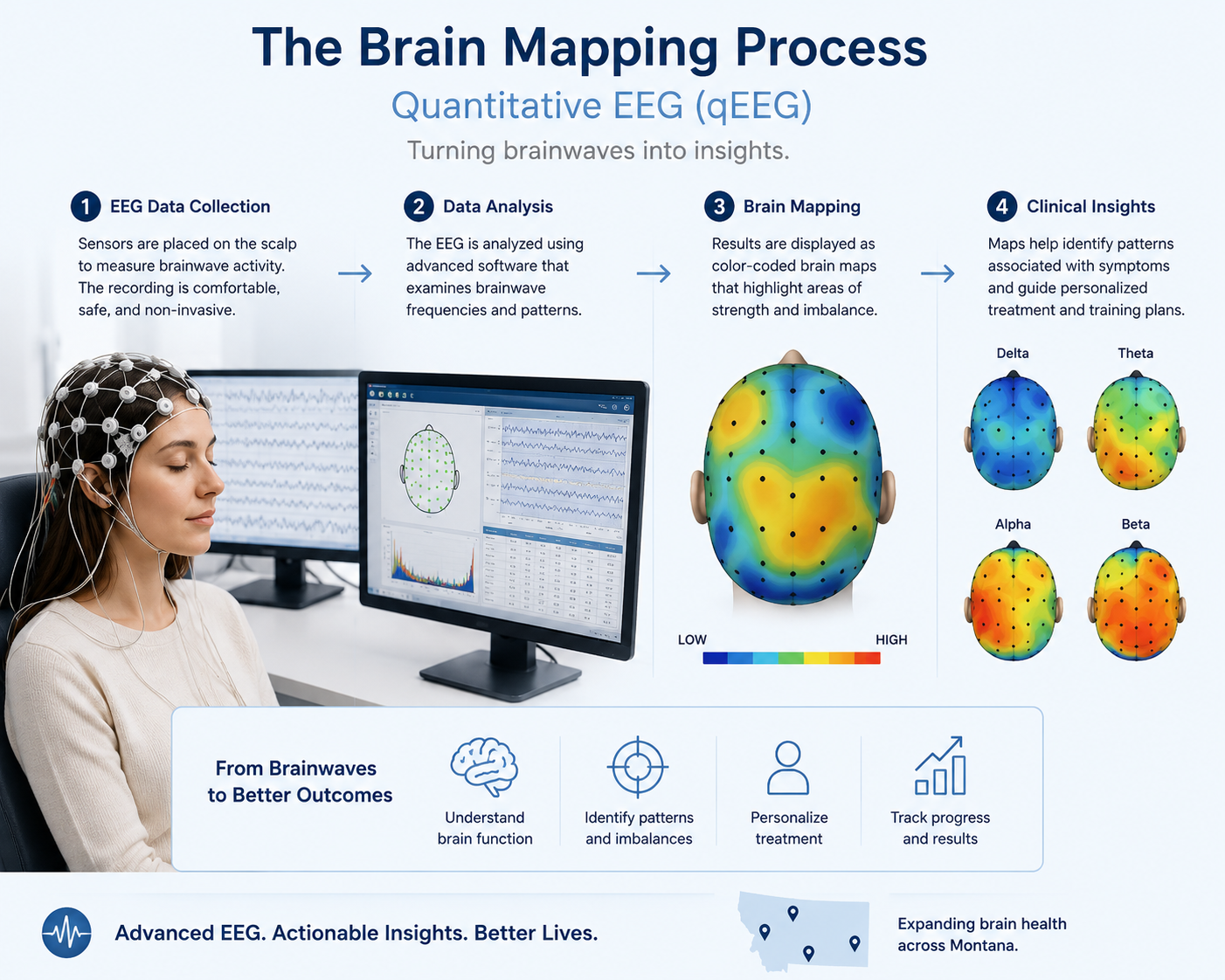
1. Brain Mapping (qEEG): A technician places a cap with 19 electrodes on the client’s head to measure brain wave activity. This produces a detailed map of brain function, helping identify areas that require improvement.
2. Developing a Treatment Protocol: Based on the brain map, a customized neurofeedback protocol is designed to train the brain toward improved function.
3. Brain Training Sessions: During a session, the client engages in a relaxing activity, such as watching a movie. When the brain functions optimally, the audio and video quality remain clear. If brain function declines, the sound or video may dim or become fuzzy — providing real-time feedback to the brain.
4. Positive Reinforcement: The brain learns that improved function results in clear sound and visuals. Over time, this repeated training encourages the brain to sustain healthier patterns, improving symptoms.
5. Ongoing Monitoring: With repeated sessions, the brain gradually adopts healthier patterns, reducing symptoms and improving overall well-being.
Unlike other treatments like tDCS or tACS, neurofeedback involves no electrical stimulation of the brain — it simply uses real-time feedback to train the brain.
-
Because brain wave patterns influence almost every aspect of brain function, neurofeedback can help with a wide range of conditions, including:
Mental Health Disorders: Anxiety, depression, PTSD, OCD, and panic disorders often respond positively to neurofeedback. At the nCenter, combining neurofeedback with Somatic Experiencing therapy, led by counselor Ruth Story, can significantly improve mental health outcomes.
Developmental Delays & Behavioral Disorders: Neurofeedback can improve brain function in children with ADHD, learning disabilities, or autism. Integrating neurofeedback with Child Therapy with Jennifer Gribble at the nCenter often maximizes treatment success.
Brain Injuries (TBI) & Neurological Conditions: Clients recovering from concussions, TBIs, or other neurological challenges often experience improved cognitive function and reduced symptoms. Pairing neurofeedback with Nutritional Counseling by Candice Vann, our functional medicine nutritionist, can support brain healing.
Peak Performance: Neurofeedback can enhance cognitive performance for athletes, executives, and students. Combining it with CBT Counseling with Kyra Laura at the nCenter helps build the confidence needed for high performance.
-
The effectiveness of neurofeedback, like any treatment, depends on several factors, including the client’s condition and treatment plan. Research and clinical experience consistently show positive outcomes for individuals receiving neurofeedback therapy.
At the nCenter, we have seen substantial improvements in our clients’ mental health, cognitive functioning, and overall well-being through neurofeedback therapy. Studies have demonstrated neurofeedback’s ability to create lasting changes in brain function, especially when combined with counseling or nutrition support.
-
Neurofeedback is widely considered safe and non-invasive. It operates like mental exercise — simply encouraging the brain to perform better. There is no electrical stimulation involved, making it a natural and safe treatment.
Occasionally, clients may experience temporary side effects, such as:
Mild headaches
Fatigue
Sleep disturbances
Heightened anxiety
These effects are usually short-lived and resolve within 24-48 hours. The nCenter team monitors your progress closely to make any necessary adjustments for comfort and effectiveness.
-
Progress occurs gradually, with most clients noticing changes after 10-15 sessions. For optimal results, we recommend:
Two sessions per week: One session of neurofeedback and one session of neurostimulation to reinforce brain wave balance.
30-40 total sessions: For complex conditions or long-standing issues, 30-40 sessions may be necessary for lasting improvements.
Follow-Up qEEG Brain Maps: After 10-15 sessions, a follow-up brain map may be conducted to assess progress and adjust protocols if necessary.
Common Questions About Neurofeedback

Understanding Brain Waves
Our brain cells communicate through electrical impulses called brain waves, which regulate our mood, focus, and overall functioning. These waves have two main characteristics:
Frequency: The speed at which the wave travels.
Amplitude: The height of the wave as it fluctuates.
Different brain waves correlate with different mental states:
Faster brain waves are linked to focus, cognition, and alertness.
Slower brain waves are associated with relaxation, sleep, and meditation.
For individuals struggling with mental health conditions or brain injuries, these waves may become dysregulated. For example:
Anxiety: Characterized by excessive fast brain wave activity, leading to feelings of tension and hyper-vigilance.
ADHD: Often associated with excessive slow brain wave activity, resulting in difficulty concentrating and staying engaged.
Neurofeedback aims to regulate these waves, promoting a more balanced and healthy brain state.
Long-term benefits are possible as neurofeedback fosters lasting changes in brain wave activity.
Is Neurofeedback Covered by Insurance?
Insurance coverage for neurofeedback varies by provider. At the nCenter, we will
contact your insurance company to determine your plan’s coverage. However, we
recommend confirming coverage with your provider directly.
Why Choose Neurofeedback at the nCenter?
The nCenter offers a comprehensive, integrative approach to brain health, combining
neurofeedback with:
qEEG Brain Mapping to identify dysregulated brain waves.
Neurostimulation Therapy to enhance brain function.
Counseling Services to support mental health.
Nutritional Counseling to improve brain and body health.
We believe that by addressing brain function from multiple angles, we can help you
achieve significant, long-lasting improvements.
Contact the nCenter today to schedule your brain map and learn how neurofeedback can help you or your loved one achieve better mental and physical well-being.